How Respite Care Supports Families Caring for Loved Ones at Home
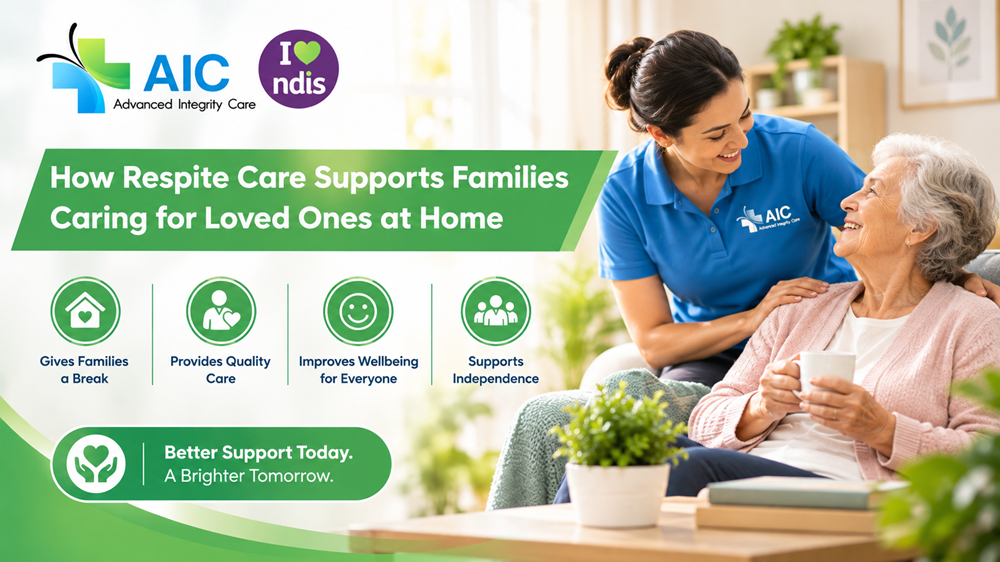
How Respite Care Supports Families Caring for Loved Ones at Home. Caring for a loved one at home can be meaningful, but it can also become physically and emotionally demanding. Many family carers help with meals, personal care, medication reminders, transport, appointments, mobility and everyday household tasks. Over time, even a very committed carer can feel tired.
That is where respite care at home can help.
Respite care gives a family carer temporary relief while another suitable support worker looks after the person they care for. The break may last a few hours, a full day, overnight or longer depending on the arrangement. As a result, families can continue caring at home while also protecting their own wellbeing.
For families across NSW, in-home respite care can be especially useful because the person receiving support can remain in familiar surroundings.
What Is Respite Care?
Respite care is temporary support that allows a regular carer to take time away from their caring responsibilities.
According to Carer Gateway, respite may be provided by family members, friends or formal services. It can happen in the home, in the community, at a centre or in residential care. It may be arranged for a few hours or for a longer period such as overnight or over a weekend.
In-home respite may include support with:
Personal care
Meal preparation
Companionship
Mobility assistance
Daily routines
Medication prompts
Community access
Light household activities
Therefore, respite is not simply about giving a carer “time off”. It is also about maintaining continuity of care for the person receiving support.
Why Family Carers Need Regular Breaks
Family carers often place their loved one's needs ahead of their own.
At first, this may feel manageable. However, when caring continues every day, carers can become exhausted. They may sleep poorly, skip social activities, delay medical appointments or lose time with other family members.
Regular carer respite support can reduce this pressure.
A planned break gives carers time to rest, attend appointments, meet friends, exercise or simply enjoy a quiet afternoon. Carer Gateway also encourages carers to take regular time to rest and recharge, rather than waiting until they become overwhelmed.
How Respite Care Helps Prevent Carer Burnout
Carer burnout can build slowly.
A person might start feeling constantly tired, impatient or emotionally drained. They may also find that even simple tasks begin to feel difficult.
Therefore, planned respite services for carers can act as a practical form of prevention.
Instead of waiting for a crisis, families can arrange support every week or fortnight. For example, a support worker may visit for four hours while the primary carer rests or attends personal commitments.
That predictable break can make a big difference.
Although respite cannot remove every challenge associated with caring, it can give carers space to recover their energy and maintain a healthier routine.
Related Post:
» NDIS Respite Care: How It Enhances Family Wellbeing
» Choosing the Right Respite Care
» The Impact of Respite Care on Long-Term Caregiving
» NDIS Nursing Services for Aged Care Patients
Respite Care Helps Families Continue Caring at Home
Many people prefer to remain at home for as long as possible.
However, the sustainability of home care often depends heavily on the wellbeing of the family members providing daily support.
If one person carries every responsibility, the arrangement may become difficult to maintain.
In contrast, home respite care shares the load.
A trained support worker can step in temporarily, which means the regular carer does not need to handle every task alone.
Consequently, families may feel more confident about continuing care at home rather than making major decisions simply because the primary carer is exhausted.
Benefits for the Person Receiving Care
Respite care also benefits the person receiving support.
A new support worker can bring conversation, social interaction and a different activity into the day. For some people, that change can be enjoyable.
At the same time, staying at home can provide familiarity.
The person can remain around their own furniture, routines, pets and belongings. This can be particularly important for older people or individuals who feel unsettled in unfamiliar environments.
Therefore, in-home respite services can support both independence and comfort.
Planned Respite vs Emergency Respite Care
Not all respite situations are the same.
| Type of Respite | When It May Be Used | Example |
|---|---|---|
| Planned respite | Regular scheduled breaks | Weekly afternoon support |
| Short-term respite | Temporary extra assistance | Family event or holiday |
| Overnight respite | Carer needs longer rest | Overnight or weekend support |
| Emergency respite | Carer suddenly cannot provide care | Illness, injury or unexpected crisis |
Carer Gateway states that planned respite may be available through tailored support arrangements. It also explains that emergency respite can sometimes be organised when a carer suddenly becomes ill or injured, subject to suitable local service availability.
Therefore, families should ideally plan respite before an emergency happens.
Why an Emergency Care Plan Matters
Unexpected situations happen.
A carer may become unwell, need surgery or suddenly need to travel. Without a backup plan, families can feel rushed and uncertain.
For that reason, having an emergency care plan is useful.
The plan may include:
Medication details
Emergency contacts
Daily routines
Mobility requirements
Dietary needs
Medical contacts
Behavioural or communication needs
Preferred support arrangements
Carer Gateway specifically recommends preparing an emergency care plan in case someone else needs to take over caring responsibilities.
Respite Care and NDIS Participants
For some people living with disability, respite-style support may form part of their broader disability support arrangements where appropriate and funded.
However, the exact support available depends on the participant's plan, goals, needs and current NDIS rules.
Therefore, families should check their individual plan rather than assuming a particular service is automatically covered.
In practice, NDIS respite support may involve short-term assistance, community participation or support that gives informal carers a break while helping the participant maintain their routine and independence.
Respite Care for Older People
Older Australians may also benefit from respite care.
Support may help with daily living, social interaction and general safety while the regular carer takes a break.
For people living with dementia, respite can become particularly important because caring responsibilities may be intensive. AIHW reports that around 22,100 people living with dementia who completed a comprehensive aged-care assessment in 2023–24 were approved for residential respite care.
However, respite does not always need to involve a residential facility.
For some families, respite care at home in NSW may feel more comfortable because the person can remain in a familiar environment.
What Can a Respite Support Worker Do at Home?
The actual support depends on the person's needs.
A respite support worker may assist with:
Getting dressed
Showering support
Preparing meals
Light housework
Going for a walk
Attending community activities
Companionship
Mobility assistance
Following daily routines
Meanwhile, the family carer can leave the house or simply rest in another room.
This flexibility is one of the biggest strengths of home-based respite.
How Often Should Families Use Respite Care?
There is no single answer.
Some carers may need a few hours each week. Others may prefer a longer break once or twice a month.
The best frequency depends on:
The person's level of care needs
The carer's health
Work commitments
Family support
Sleep disruption
Other responsibilities
Importantly, families should not wait until the primary carer feels completely exhausted.
Regular, planned respite is often easier to manage than emergency support.
How Respite Care Improves Family Relationships
Constant caregiving can sometimes change family relationships.
A spouse may start feeling more like a full-time carer than a partner. Likewise, an adult child may struggle to balance parenting, work and caring for an ageing parent.
A short break can create some space.
As a result, carers may return feeling calmer and more patient. They can then spend time with their loved one without every interaction revolving around care tasks.
So, respite can support the relationship as well as the practical care arrangement.
Choosing a Respite Care Provider in NSW
Families should look for support that feels safe, respectful and flexible.
When comparing providers, ask about:
Worker experience
Personal care support
Service areas
Availability
Communication
Care planning
Cultural preferences
Emergency procedures
NDIS-related services where relevant
Additionally, explain the person's routine clearly.
A good respite arrangement should fit around the individual rather than force them into an unfamiliar schedule.
Advanced Integrity Care - NSW and Respite Support
Advanced Integrity Care - NSW supports individuals and families who need reliable assistance at home.
Depending on individual requirements and service arrangements, respite support can help family carers take a break while their loved one continues receiving respectful, person-centred care.
Most importantly, good respite care should feel like a natural extension of the person's usual support.
For families, that can mean more confidence. For carers, meanwhile, it can mean having time to rest without constantly worrying about what is happening at home.
Conclusion
Caring for someone at home can bring families closer, yet it also takes time, patience and energy.
Therefore, asking for respite support should not be seen as stepping away from caring. In many cases, it helps carers continue their role for longer.
Respite care for families in NSW can provide breathing space, support routine and reduce the pressure that often falls on one person.
With the right arrangement, the person receiving care remains supported while the family carer gets the chance to rest, recharge and return with more energy.
That balance matters.
Because when carers receive support as well, home care becomes more sustainable for everyone.


Comments
Post a Comment