How Community Access Services Support Independence Every Day
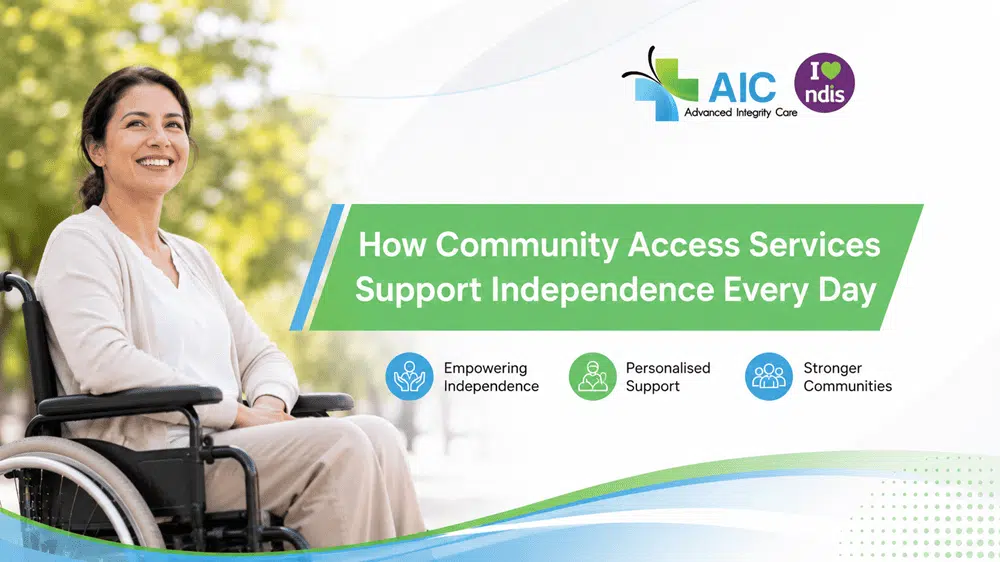
How Community Access Services Support Independence Every Day. At Advanced Integrity Care - NSW, Community Access Services play a vital role in helping people live more independently, confidently, and meaningfully every single day. In fact, these services do far more than just provide support; they actively build life skills, encourage social participation, and promote real inclusion in everyday community life across New South Wales.
Moreover, many individuals living with disability, mental health challenges, or age-related limitations often want to stay active in their community. However, they may need a bit of structured support to do so safely and comfortably. Therefore, community access services bridge this gap in a practical and respectful way.
Additionally, this article explains how community participation support improves independence, wellbeing, and quality of life in simple and real terms.
What Are Community Access Services?
Community Access Services refer to structured support that helps individuals engage in everyday activities outside their home. For example, going shopping, attending appointments, joining social groups, or participating in recreational activities.
Furthermore, at Advanced Integrity Care - NSW, support workers assist individuals based on their personal goals and abilities. As a result, each person receives tailored assistance rather than a one-size-fits-all approach.
Moreover, the focus always stays on independence, not dependency.
Why Community Access Services Matter for Independence
Firstly, independence does not always mean doing everything alone. Instead, it means having the right support at the right time. Therefore, independent living support becomes more achievable through guided assistance.
Additionally, community access services help reduce isolation, which is a major issue for many individuals.
Moreover, they encourage people to try new experiences safely, which builds confidence over time.
| Area of Support | How It Helps Independence |
|---|---|
| Social activities | Builds confidence & friendships |
| Transport support | Encourages mobility |
| Skill building | Improves daily living ability |
| Community participation | Reduces isolation |
| Health appointments | Improves wellbeing |
How Community Access Services Support Daily Life
Community access services support individuals in many everyday situations. For instance:
- Shopping for groceries
- Attending medical appointments
- Visiting friends or family
- Joining community events
- Learning public transport routes
Furthermore, these activities may seem simple, but they build strong foundations for independence.
Additionally, support workers guide individuals step-by-step, so they gradually learn to do more on their own.
Building Life Skills Through Community Participation
One of the most important benefits is life skills development. Therefore, individuals learn practical skills that improve their daily independence.
For example:
- Budgeting money while shopping
- Communicating with service providers
- Using public transport safely
- Planning daily routines
Moreover, these skills do not develop overnight. Instead, they grow gradually through repeated practice and encouragement.
Additionally, people often feel more confident once they realise they can manage tasks they once found difficult.
Related Post:
» NDIS Respite Care: How It Enhances Family Wellbeing
» Choosing the Right Respite Care
» The Impact of Respite Care on Long-Term Caregiving
» NDIS Nursing Services for Aged Care Patients
Emotional and Social Benefits
Community access services also strongly support emotional wellbeing. Therefore, individuals feel less lonely and more connected.
Moreover, social interaction plays a key role in mental health improvement.
For instance:
- Reduced feelings of isolation
- Increased self-esteem
- Better emotional stability
- Stronger sense of belonging
Furthermore, participating in group activities helps individuals form friendships, which improves overall happiness.
However, the biggest change often comes from simply feeling included in everyday community life.
Role of Support Workers in Daily Independence
Support workers at Advanced Integrity Care - NSW play a very important role. Firstly, they provide guidance. Secondly, they encourage independence rather than doing everything for the individual.
Moreover, they understand personal goals and adjust support accordingly.
Additionally, they help individuals build confidence in unfamiliar environments.
For example, instead of completing a task for someone, a support worker may guide them step-by-step until they feel comfortable doing it alone.
Comparison: Independent Living With and Without Community Access Services
| Factor | Without Support | With Community Access Services |
|---|---|---|
| Social engagement | Low | High |
| Confidence level | Limited | Strong |
| Daily skill development | Slow | Steady improvement |
| Community participation | Rare | Regular |
| Independence growth | Minimal | Consistent |
Furthermore, this comparison clearly shows how structured support improves quality of life over time.
Promoting Inclusion in the Community
Inclusion is a key part of community access support. Therefore, individuals feel accepted and valued in society.
Moreover, inclusion reduces stigma and increases awareness within the wider community.
Additionally, participating in normal daily activities helps people feel equal and respected.
However, inclusion is not just about presence; it is about active participation.
How Community Access Builds Confidence
Confidence grows when individuals achieve small goals consistently. Therefore, community access services focus on gradual progress.
For example:
- Successfully completing a shopping trip
- Attending a social event independently
- Learning a new skill
Moreover, each achievement builds motivation for the next step.
Additionally, support workers celebrate progress, which encourages positive self-belief.
Flexible Support Based on Individual Needs
One important strength of these services is flexibility. Therefore, support plans are designed according to personal needs and goals.
Moreover, no two individuals receive the same routine.
For instance:
- Some may need daily support
- Others may need weekly assistance
- Some may only need guidance for specific activities
Additionally, flexibility ensures dignity and respect in every situation.
Practical Examples of Community Access Activities
Here are common activities supported under community participation services:
- Visiting parks and recreational areas
- Attending appointments independently
- Joining hobby groups
- Learning travel routes
- Shopping and errands
Furthermore, these activities promote both physical and emotional wellbeing.
Additionally, they help individuals feel part of everyday society.
Challenges and How Support Helps Overcome Them
Many individuals face challenges such as anxiety, mobility issues, or lack of confidence. However, community access services help reduce these barriers.
Moreover, gradual exposure to real-world situations makes challenges easier to manage.
Additionally, consistent support ensures safety while learning new skills.
Therefore, individuals slowly overcome fears and become more independent.
Long-Term Impact of Community Access Services
Over time, community access services create lasting positive changes.
For example:
- Improved independence
- Stronger social networks
- Better mental health
- Increased daily confidence
Moreover, individuals often require less support as they gain more skills.
However, ongoing support remains available when needed.
Conclusion
In conclusion, Community Access Services play a powerful role in supporting independence every day. Moreover, at Advanced Integrity Care - NSW, these services focus on building confidence, life skills, and community participation in a respectful and personalised way.
Therefore, with the right support, individuals can enjoy greater independence, stronger social connections, and a better quality of life across NSW.
Social:
https://x.com/a_i_care/status/2062397109790449973
https://www.linkedin.com/feed/update/urn:li:share:7468164208254410753/


Comments
Post a Comment