Disability Care Services: A Complete Guide to Personalised Support
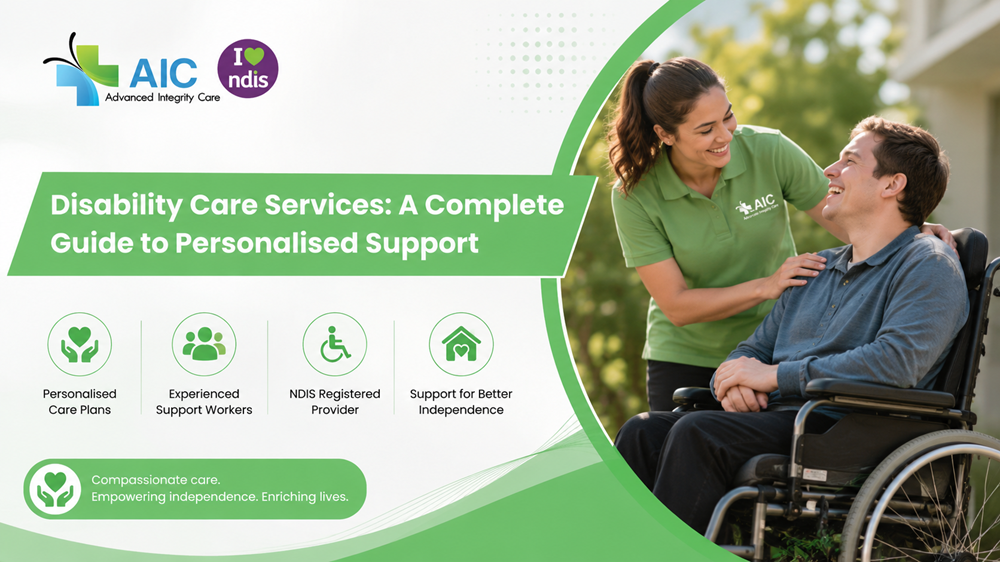
Disability Care Services: A Complete Guide to Personalised Support. Finding the right support can make everyday life easier, more comfortable and more empowering for people living with disability. Disability care services are not simply about helping someone complete daily tasks. Instead, good support focuses on the individual’s goals, choices, abilities, relationships and preferred way of living.
At Advanced Integrity Care - NSW, we understand that every person has different needs. Therefore, our approach to personalised disability support focuses on respectful care that fits naturally into each person’s routine. Whether someone needs help at home, support in the community or assistance with developing greater independence, the right service can make a meaningful difference.
What Are Disability Care Services?
Disability care services provide practical and personal assistance to people who live with disability. Depending on individual needs, support may include help with personal activities, household tasks, community participation, transport, social activities and skill development.
However, disability care should never feel like a one-size-fits-all arrangement. Each person deserves support that considers their abilities, preferences and personal goals.
For example, one participant may need assistance with morning routines, while another may want support to attend community activities or build confidence with everyday responsibilities.
Common Disability Support Services
| Support area | How it may help |
|---|---|
| Personal care | Assistance with everyday personal activities |
| Household support | Help with suitable domestic tasks |
| Community participation | Support to attend social and community activities |
| Transport assistance | Help accessing appointments and community activities |
| Daily living skills | Building confidence with everyday routines |
| Social support | Encouraging meaningful social connections |
| Independence support | Developing practical skills and confidence |
Why Personalised Support Matters
Most importantly, personalised disability care places the individual at the centre of the service. Rather than deciding what a person should do, support workers listen to what the participant wants to achieve.
This approach can also encourage greater choice and control. For instance, a participant might want to learn how to prepare simple meals, use public transport, manage household routines or participate in a favourite community activity.
Furthermore, personalised care can change as a person’s circumstances change. Needs, goals and preferences may develop over time, so support should remain flexible rather than staying fixed.
Supporting Independence in Everyday Life
Independence does not necessarily mean doing everything without assistance. In disability support, it can mean having the confidence, skills and choice to take part in daily life in a way that works for you.
A disability support worker may provide practical assistance while encouraging the participant to take part wherever possible. Over time, this can help develop confidence with activities such as:
- Preparing meals
- Shopping for groceries
- Organising personal routines
- Keeping living areas organised
- Attending community activities
- Developing social skills
- Using suitable transport options
- Learning everyday household skills
Importantly, the level of assistance can depend on the person’s individual circumstances.
Community Participation and Social Connection
Being connected to the community can contribute to a person’s sense of belonging. Therefore, community participation support can be an important part of personalised care.
A support worker may assist someone to attend a local event, visit a community centre, enjoy a hobby, meet friends or take part in recreational activities.
Likewise, support can help remove some of the practical barriers that make community participation difficult. The goal is not simply to get someone from one place to another. Instead, it is about helping them participate in activities that are meaningful to them.
What Makes a Good Disability Support Worker?
A reliable support worker needs more than practical skills. Compassion, patience, communication and respect are equally important.
A good worker should listen carefully and understand that the participant remains an important decision-maker in their own life. Moreover, they should respect privacy, personal boundaries and individual preferences.
Here are some qualities to look for:
- Respectful communication
- Patience and understanding
- Reliability and professionalism
- Respect for personal choice
- Positive attitude
- Ability to follow individual support plans
- Commitment to participant dignity
These qualities can help create a comfortable and trusting support relationship.
Related Post:
» NDIS Respite Care: How It Enhances Family Wellbeing
» Choosing the Right Respite Care
» The Impact of Respite Care on Long-Term Caregiving
» NDIS Nursing Services for Aged Care Patients
Person-Centred Care in NSW
Person-centred disability care means looking beyond a person’s disability and understanding the individual. Their interests, strengths, goals, culture, relationships and daily preferences all matter.
At Advanced Integrity Care - NSW, personalised support can be shaped around what matters most to the participant. This may involve adjusting routines, encouraging participation or providing assistance where it is genuinely needed.
Additionally, families and carers may have an important role in the support journey, depending on the participant’s wishes and circumstances. Open communication can help everyone understand expectations and provide more consistent support.
Choosing the Right Disability Care Provider
Choosing a provider is an important decision. Therefore, it helps to ask practical questions before starting services.
Consider the following:
| What to consider | Why it matters |
|---|---|
| Personalised approach | Support should reflect individual needs |
| Communication | Clear communication helps build trust |
| Worker compatibility | A comfortable relationship can improve the experience |
| Flexibility | Needs may change over time |
| Participant choice | People should have a say in their support |
| Reliability | Consistent services make planning easier |
| Safety and professionalism | Quality care should protect dignity and wellbeing |
Most importantly, choose a provider that listens instead of simply offering a standard package.
The Role of Families and Carers
Families and informal carers often provide valuable support. However, caring responsibilities can become demanding, especially when ongoing assistance is required.
Professional disability care services can provide additional support while allowing families to maintain their relationships without every responsibility falling on them.
At the same time, the participant’s preferences should remain central. Good support works alongside families and other people involved in a person’s life rather than taking away their voice.
Flexible Support for Changing Needs
Life does not always follow a fixed routine. Consequently, disability support may need to change as circumstances, goals or priorities change.
Someone may initially need substantial assistance with daily activities but later become more confident with certain tasks. Similarly, a person may require additional support during a period of change.
For this reason, flexible disability support can be valuable. Regular communication helps identify what is working, what needs improvement and where additional assistance may be useful.
Why Advanced Integrity Care - NSW?
At Advanced Integrity Care - NSW, the focus is on providing respectful, individual-focused support. Every participant has their own story, strengths and goals. Therefore, care should reflect those differences.
Our approach aims to provide practical assistance while promoting dignity, choice and greater participation in everyday life. Whether support involves daily routines, community activities or developing independence, the service should feel relevant to the individual.
Ultimately, quality disability care is about people, not just services. It is about creating support that fits into real life and helps each person move towards their own goals.
Conclusion
Disability care services can provide much more than practical assistance. With the right approach, they can support independence, confidence, community participation and a greater sense of choice.
However, the most effective support begins with listening. By understanding individual needs and respecting personal preferences, providers can create a more meaningful care experience.
If you are exploring personalised disability support in NSW, consider a provider that values dignity, flexibility and individual choice. At Advanced Integrity Care - NSW, the aim is simple: provide dependable support that helps people live their lives with greater confidence and control.
Social:
https://x.com/a_i_care/status/2096811866127503610
https://www.linkedin.com/feed/update/urn:li:share:7502578365405659136/


Comments
Post a Comment