The Role of Community Participation in Improving Disability Wellbeing
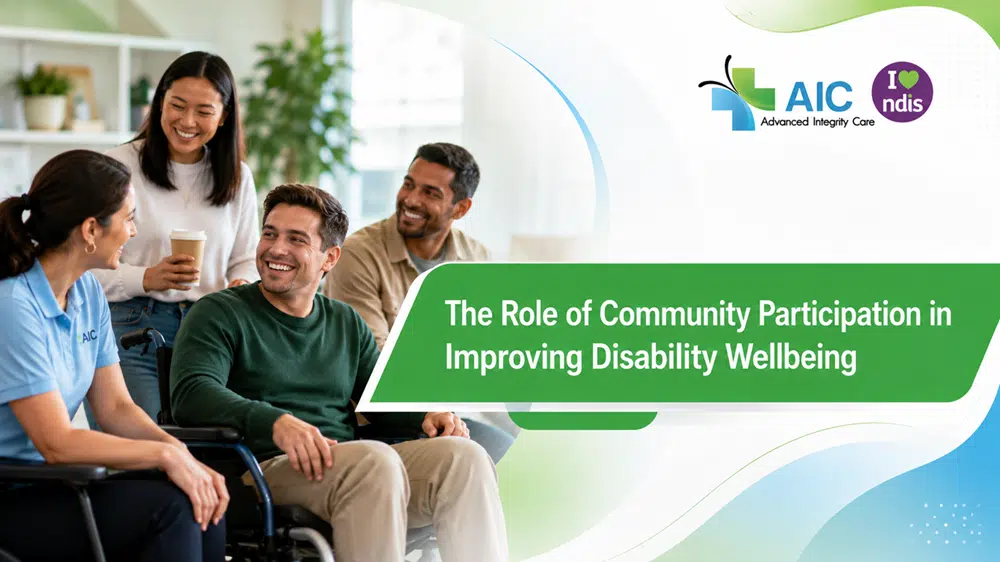
The Role of Community Participation in Improving Disability Wellbeing. Community participation plays an important role in helping people with disability build confidence, develop relationships and enjoy a greater sense of belonging. Being part of a local community is not simply about attending events. It can involve meeting friends, joining a sporting group, visiting a library, volunteering, learning new skills, enjoying hobbies or taking part in cultural activities.
For people receiving disability support in NSW, meaningful participation can also encourage greater independence, choice and social connection. At Advanced Integrity Care - NSW, a person-centred approach can help individuals explore activities that match their interests, abilities and personal goals.
According to the Australian Institute of Health and Welfare (AIHW), around 1 in 5 Australians, or approximately 5.5 million people, had disability in 2022. Therefore, creating communities where everyone can participate matters to individuals, families and society as a whole.
What Is Community Participation?
Community participation for people with disability means having opportunities to take part in everyday activities and connect with people outside the home. It should be based on the individual's preferences rather than a fixed list of activities.
For example, one person may enjoy joining a local walking group, while another may prefer attending an art class or visiting a community centre. Similarly, someone else may want to develop employment skills, volunteer locally or attend sporting events.
Most importantly, participation should feel meaningful. It should give a person the opportunity to make choices, meet others and contribute in ways that suit their lifestyle.
Why Community Participation Matters for Disability Wellbeing
Community involvement can influence several areas of disability wellbeing at the same time.
1. Builds Social Connections
Regular community activities can help people meet new people and maintain friendships. Consequently, individuals may feel less alone and more connected to their local area.
This is particularly important because social isolation remains a concern for many Australians with disability. AIHW reports that 19% of people with disability aged 15–64 experienced social isolation in 2021, compared with 9.5% of people without disability.
A simple conversation at a community event or a regular activity can sometimes become an important friendship over time.
2. Supports Mental and Emotional Wellbeing
Feeling included can have a positive effect on mental wellbeing. When people have opportunities to interact with others, pursue interests and contribute to their community, they may develop a stronger sense of purpose.
Moreover, community participation can provide routine. Having something enjoyable to look forward to each week can make everyday life more engaging.
The NDIS also identifies social and community activities as potential contributors to belonging, connection, inclusion, confidence and safety.
3. Encourages Independence
Community activities can provide practical opportunities to develop independence. For instance, a person might practise using public transport, managing money during shopping, communicating with unfamiliar people or following a daily schedule.
Over time, these experiences can strengthen confidence in making decisions and handling everyday situations.
However, independence does not mean doing everything without assistance. Rather, it means having appropriate support while maintaining choice and control.
Community Participation and Physical Wellbeing
Community involvement can also encourage people to become more physically active. Depending on an individual's interests and abilities, activities might include swimming, gardening, walking, adapted sports or simply visiting local places.
Physical activity can become more enjoyable when it forms part of a social routine. Instead of exercising alone, a person may participate with friends, support workers or community groups.
Furthermore, getting out into the community can create opportunities to spend time outdoors and break up long periods at home.
Building Confidence Through Everyday Experiences
Confidence often develops through small achievements.
For example, someone who feels nervous about attending a new community centre may initially visit with a support worker. After several visits, they might recognise familiar faces, learn the layout and feel comfortable ordering a drink or joining an activity.
Eventually, the person may decide which activities they want to attend and how often they want to go.
This gradual approach can make community access for people with disability more comfortable and sustainable.
Related Post:
» NDIS Respite Care: How It Enhances Family Wellbeing
» Choosing the Right Respite Care
» The Impact of Respite Care on Long-Term Caregiving
» NDIS Nursing Services for Aged Care Patients
Removing Barriers to Participation
Although community participation offers many benefits, people with disability can still face barriers. These may include:
| Common barrier | Possible impact |
|---|---|
| Limited accessible transport | Makes it harder to attend activities |
| Physical accessibility issues | Can restrict access to buildings and facilities |
| Communication barriers | May make social interaction difficult |
| Cost of activities | Can reduce available choices |
| Lack of confidence | May discourage new experiences |
| Negative attitudes | Can affect belonging and participation |
| Limited information | Makes suitable activities harder to find |
| Lack of appropriate support | Can prevent regular attendance |
AIHW data shows that 23% of people with disability aged 15–64 had difficulty getting to places they needed to reach in 2019, compared with 17% of people without disability.
Therefore, improving participation requires more than simply encouraging someone to “get involved”. Communities also need to remove practical and social barriers.
How Disability Support Can Encourage Participation
A good disability support service in NSW can help individuals identify activities that genuinely interest them. The process may begin with a simple conversation about hobbies, goals, preferred environments and current challenges.
Support may include:
- Finding suitable local activities
- Supporting community access
- Building confidence in unfamiliar environments
- Assisting with transport planning
- Supporting communication
- Encouraging social interaction
- Developing everyday skills
- Helping individuals pursue personal interests
- Gradually increasing independence
Importantly, support should not replace the person's decision-making. Instead, it should help them participate on their own terms.
Community Participation in NSW
For people living across New South Wales, local opportunities can vary considerably. Some individuals may prefer busy community hubs, while others may feel more comfortable with smaller groups or quieter activities.
The right option depends on the person's goals, location, accessibility needs and interests.
Current AIHW data shows that 72% of people with disability in NSW participated in social activities in 2022. Nationally, 71% of people with disability aged 15 and over participated in social activities that year.
These figures show that participation is already part of many people's lives, while also highlighting the need to continue improving inclusion.
The Role of Family, Support Workers and Communities
Families can provide encouragement and help identify activities that match a person's interests. Likewise, support workers can provide practical assistance while allowing individuals to take the lead.
At the community level, clubs, businesses, libraries, recreation centres and local organisations can make participation easier by improving accessibility and welcoming people with different abilities.
Small changes can make a genuine difference. Clear information, accessible entrances, flexible communication and respectful attitudes can help create more inclusive spaces.
Measuring Meaningful Participation
Successful community participation should not simply be measured by the number of outings someone attends. Instead, the quality of the experience matters.
Useful questions include:
- Did the person enjoy the activity?
- Did they make a choice about what they wanted to do?
- Did they meet or interact with others?
- Did they learn something new?
- Did their confidence improve?
- Did the activity support a personal goal?
- Would they like to do it again?
In this way, person-centred disability support focuses on meaningful outcomes rather than simply completing activities.
Conclusion
Community participation can make a meaningful difference to disability wellbeing. It can support friendships, confidence, independence, physical activity and a stronger sense of belonging. At the same time, communities must address barriers so that participation becomes realistic and enjoyable.
At Advanced Integrity Care - NSW, supporting people to connect with their community can form an important part of a broader person-centred approach. Ultimately, everyone should have opportunities to pursue their interests, build relationships and feel that they belong.
Social:
https://x.com/a_i_care/status/2091759139194339388
https://www.linkedin.com/feed/update/urn:li:share:7497525254680928256/


Comments
Post a Comment