Independent Living: Guide for Participants and Families
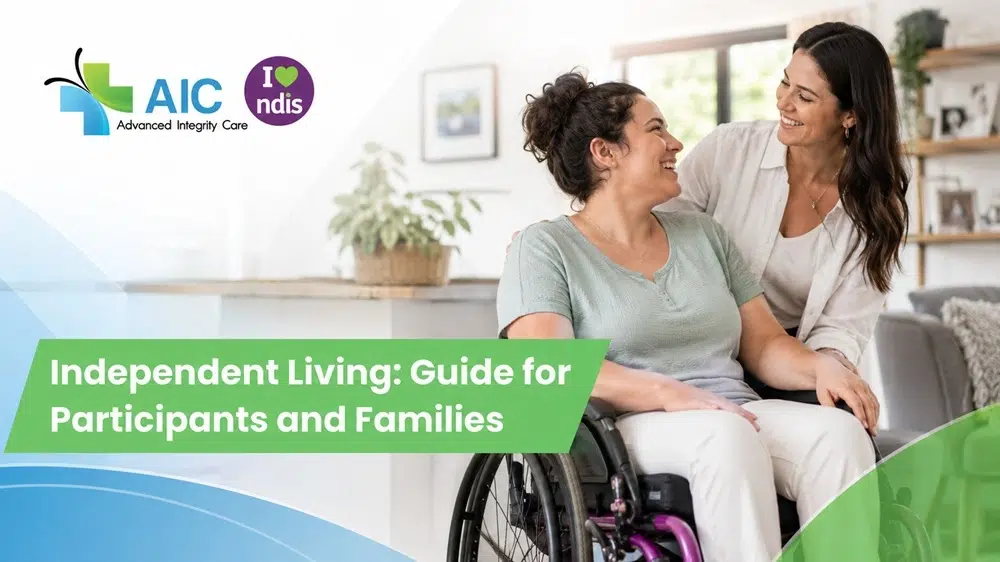
Independent Living: Guide for Participants and Families. Independent living can be an important step for people with disability who want greater choice, confidence and control over their everyday lives. However, becoming more independent does not mean doing everything without help. Instead, it means having the right support to make decisions, build practical skills and participate in the community.
For participants and families in NSW, the journey towards independent living may look different for everyone. Some people may need occasional assistance with household tasks, while others may benefit from regular support with personal care, transport, meal preparation or community activities.
At Advanced Integrity Care - NSW, understanding these individual needs is important when creating a support approach that encourages independence while maintaining safety and wellbeing.
What Does Independent Living Mean?
Independent living for people with disability focuses on having control over personal choices and everyday routines. It allows participants to decide how they want to live, where they want to go, and what goals they want to work towards.
Importantly, independence does not mean living completely alone.
A participant may live independently while still receiving support from carers, support workers, family members or other professionals. The main difference is that the participant remains involved in decisions about their life and support.
For example, independent living may include:
- Choosing daily routines
- Preparing simple meals
- Managing household tasks
- Shopping for groceries
- Using public transport
- Managing appointments
- Taking part in community activities
- Developing social connections
- Learning money-management skills
- Making personal decisions
Therefore, the focus should remain on choice, control and individual goals.
Why Is Independent Living Important?
Building independence can provide several benefits. First, it can improve confidence. When participants successfully complete everyday tasks, they may feel more capable of handling new situations.
Moreover, independent living can support social participation. Participants may become more comfortable attending community events, visiting local facilities or developing friendships.
It can also help families. When a participant develops practical skills and receives appropriate support, family members may feel more confident about their loved one's ability to manage everyday situations.
Key Benefits of Independent Living
| Area | Potential benefit |
|---|---|
| Daily skills | Greater confidence with everyday tasks |
| Decision-making | More choice and personal control |
| Community participation | Increased involvement in local activities |
| Social life | More opportunities to build relationships |
| Confidence | Greater sense of achievement |
| Family wellbeing | Better balance between support and independence |
| Personal goals | Progress towards individual aspirations |
These benefits will vary from person to person. Therefore, support should always reflect individual circumstances.
Creating an Independent Living Plan
A practical plan can make the transition towards independence much easier. Rather than trying to change everything at once, participants and families can identify smaller goals.
For example, someone who wants to become more independent at home might start by learning to prepare breakfast. Later, they may learn to plan meals, shop for ingredients and prepare several simple dishes.
A useful plan can consider:
- Current abilities – What can the participant already do?
- Personal goals – What would they like to learn?
- Support needs – Where is assistance required?
- Safety considerations – What risks need attention?
- Learning opportunities – Which skills can develop gradually?
- Progress – What improvements can be measured?
Most importantly, goals should feel achievable rather than overwhelming.
Essential Skills for Independent Living
Developing daily living skills can make a significant difference to a participant's confidence.
Household Skills
Participants may gradually learn to:
- Keep their living area tidy
- Wash and organise clothes
- Prepare basic meals
- Store food safely
- Use household appliances appropriately
- Manage rubbish and recycling
- Create simple cleaning routines
These tasks may appear small, but they can build useful habits over time.
Money Management
Managing money can also support independence. Participants may benefit from learning how to understand prices, create a simple budget, track spending and distinguish between essential and non-essential purchases.
Families and support workers can introduce these skills slowly. For instance, a participant might begin by managing a small weekly budget before taking on more responsibility.
Travel and Transport
Being able to travel safely can open up new opportunities. Depending on individual ability, participants may learn to use buses, trains, community transport or other suitable travel options.
Practising a familiar route several times can help build confidence. Additionally, participants can learn what to do if transport is delayed or a planned route changes.
Independent Living and Community Participation
Community participation is another important part of independent living. Life should not only revolve around household responsibilities.
Participants may enjoy activities such as:
- Local sporting groups
- Libraries
- Community centres
- Art and creative programs
- Volunteering
- Social clubs
- Shopping trips
- Educational activities
- Recreational programs
The right activity depends on personal interests. Therefore, support should encourage participants to explore what they actually enjoy rather than simply filling their schedule.
Related Post:
» NDIS Respite Care: How It Enhances Family Wellbeing
» Choosing the Right Respite Care
» The Impact of Respite Care on Long-Term Caregiving
» NDIS Nursing Services for Aged Care Patients
How Families Can Support Independence
Families often play a major role in a participant's journey. However, there can be a fine line between helping and doing everything for someone.
Sometimes, families provide extra assistance because they want to prevent mistakes. While this comes from a good place, too much assistance may reduce opportunities to practise skills.
Instead, families can encourage supported independence.
For example, rather than preparing a meal for the participant, a family member might help them follow a recipe. Over time, the participant may complete more steps independently.
Helpful Family Approaches
Encourage choices: Let participants make appropriate decisions about food, clothing, activities and routines.
Allow extra time: Some tasks may take longer when someone is learning.
Celebrate progress: Small achievements matter.
Avoid unnecessary pressure: Independence develops at different speeds.
Communicate openly: Discuss what support feels helpful and what does not.
The Role of Disability Support Workers
A disability support worker can provide practical assistance while encouraging participants to develop their own abilities.
Depending on individual needs, support may include assistance with personal routines, household activities, community participation, transport and skill development.
The aim should not be to take over every task. Instead, support workers can encourage participants to participate as much as possible.
For example:
Doing the task for the participant: Provides immediate assistance.
Doing the task with the participant: Builds confidence.
Guiding the participant to complete the task: Develops independence.
This gradual approach can help participants take greater ownership of everyday activities.
Safety While Building Independence
Independence should always include sensible safety planning. Participants and families can identify situations that may require additional support.
Safety considerations may include:
- Using kitchen appliances safely
- Understanding emergency contacts
- Managing medication according to professional instructions
- Recognising unsafe situations
- Travelling safely
- Understanding personal boundaries
- Knowing who to contact during an emergency
Importantly, safety planning should not remove every opportunity for independence. Instead, it should help participants understand risks and make informed choices.
Independent Living Support: Different Needs, Different Approaches
There is no single model that works for everyone.
| Participant situation | Possible support focus |
|---|---|
| Developing basic household skills | Cleaning, cooking and organisation |
| Learning to travel | Route planning and transport practice |
| Building social confidence | Community activities and communication |
| Managing a household | Routines, shopping and budgeting |
| Increasing decision-making | Choice and goal-setting |
| Preparing for greater independence | Gradual skill development |
As a result, personalised support remains essential.
How to Start the Journey Towards Independence
If independent living is a new goal, start small. Choose one or two practical skills that matter to the participant.
For example, begin with preparing one simple meal each week. Then, gradually introduce shopping, meal planning and kitchen organisation.
Likewise, someone interested in travelling independently could begin with a familiar local route before attempting longer journeys.
Most importantly, the participant should remain at the centre of the process.
Conclusion
Independent living for participants is about more than completing household tasks. It is about having greater choice, developing confidence and taking an active role in everyday decisions.
For families, the goal is not to stop providing support. Rather, it is to find the right balance between assistance and independence. Meanwhile, disability support workers can provide practical guidance that helps participants develop useful skills at their own pace.
With patience, encouragement and personalised support, participants can work towards meaningful independence while staying connected to their families and communities.
At Advanced Integrity Care - NSW, a participant-focused approach can help individuals work towards their personal goals with dignity, respect and appropriate support.
Social:
https://x.com/a_i_care/status/2090653375180497333
https://www.linkedin.com/feed/update/urn:li:share:7496419468118511616/


Comments
Post a Comment