How In-Home Wound Care Can Improve Comfort and Recovery
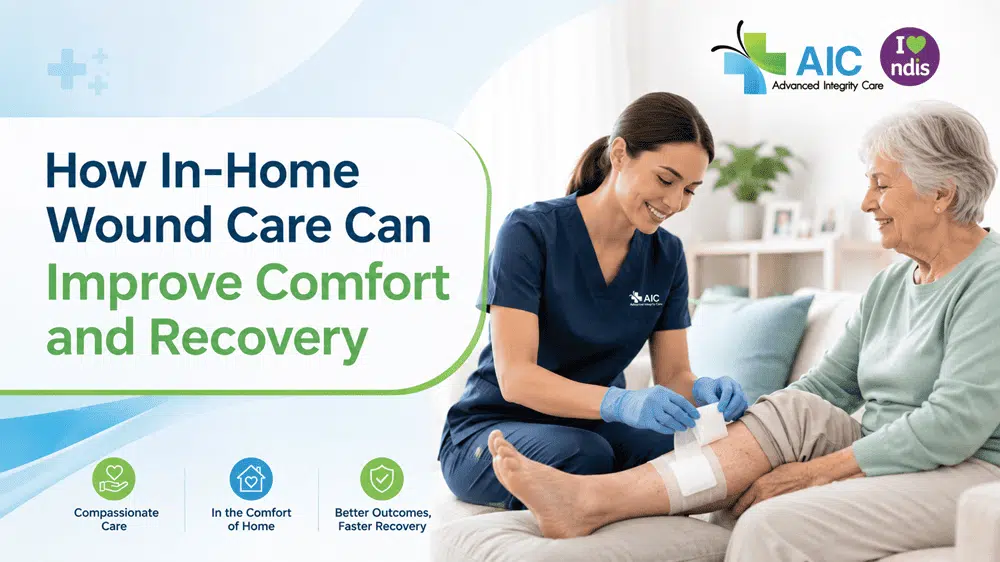
How In-Home Wound Care Can Improve Comfort and Recovery. At Advanced Integrity Care - NSW, in-home wound care plays an important role in helping people recover safely, comfortably, and with dignity. In fact, receiving wound treatment at home often improves healing outcomes compared to frequent hospital visits, especially for elderly clients, post-surgery patients, and individuals with mobility limitations.
Moreover, many people across New South Wales prefer care at home because it feels more personal and less stressful. However, proper clinical support is still essential to prevent infection and ensure proper healing.
Additionally, this article explains how home-based wound management improves comfort, speeds recovery, and supports overall wellbeing in everyday life.
What Is In-Home Wound Care?
In-home wound care refers to professional medical support provided at a person’s home to treat cuts, surgical wounds, pressure injuries, or chronic ulcers.
Furthermore, trained nurses from Advanced Integrity Care - NSW deliver dressing changes, infection monitoring, and recovery support without the need for hospital travel.
Moreover, this approach allows patients to heal in a familiar environment, which often reduces anxiety and improves comfort.
Why In-Home Wound Care Matters
Firstly, wound healing is a sensitive process. Therefore, proper hygiene and consistent care are essential.
Additionally, travelling to clinics repeatedly can cause discomfort, especially for patients with pain or limited mobility.
Moreover, in-home care reduces exposure to hospital-acquired infections, which is a major advantage.
| Factor | Hospital Care | In-Home Wound Care |
|---|---|---|
| Comfort level | Moderate | High |
| Infection exposure | Higher risk | Lower risk |
| Travel requirement | Yes | No |
| Personal attention | Limited | High |
| Recovery environment | Clinical | Familiar home setting |
Furthermore, home care often leads to better emotional wellbeing, which indirectly supports healing.
How In-Home Wound Care Improves Comfort
Comfort plays a huge role in recovery. Therefore, home wound care services focus on creating a calm and supportive environment.
Moreover, patients feel more relaxed at home, which reduces stress hormones that may slow healing.
Additionally, nurses adjust treatment schedules based on patient comfort rather than hospital routines.
For example:
- Pain is managed more gently
- Dressings are changed with minimal disruption
- Rest periods are prioritised
However, comfort does not reduce medical quality. Instead, it enhances treatment effectiveness.
Faster Recovery Through Personalised Care
One major advantage of in-home wound management is personalised attention. Therefore, nurses can closely monitor healing progress.
Furthermore, they identify early signs of infection such as redness, swelling, or unusual discharge.
Additionally, treatment plans are adjusted immediately when needed.
Moreover, consistent monitoring helps prevent complications, which speeds up recovery time.
As a result, patients often heal faster compared to inconsistent clinic visits.
Role of Advanced Integrity Care - NSW in Wound Management
At Advanced Integrity Care - NSW, wound care services are designed around individual needs.
Firstly, a full assessment is done before starting treatment. Secondly, a personalised care plan is created.
Moreover, skilled nurses ensure that sterile techniques are followed strictly.
Additionally, patients and families receive education on wound hygiene and aftercare.
Therefore, recovery continues smoothly even between visits.
Common Types of Wounds Treated at Home
In-home wound care services cover a wide range of conditions, such as:
- Post-surgical wounds
- Pressure injuries (bed sores)
- Diabetic foot ulcers
- Cuts and lacerations
- Skin tears in elderly patients
Furthermore, each wound type requires a different treatment approach.
Additionally, regular monitoring ensures proper healing at every stage.
Related Post:
» NDIS Respite Care: How It Enhances Family Wellbeing
» Choosing the Right Respite Care
» The Impact of Respite Care on Long-Term Caregiving
» NDIS Nursing Services for Aged Care Patients
Key Benefits of Home-Based Wound Care
There are many benefits associated with home nursing wound care:
- Reduced infection risk
- Improved comfort and dignity
- Faster healing process
- Less travel stress
- Better emotional support
Moreover, patients feel more in control of their recovery journey.
Additionally, families can actively participate in care, which improves overall support.
Emotional and Mental Health Benefits
Healing is not only physical. Therefore, emotional wellbeing plays a big role in recovery.
Moreover, being treated at home reduces anxiety and hospital-related stress.
Additionally, familiar surroundings improve sleep quality, which supports tissue repair.
However, emotional comfort is often underestimated in medical recovery.
Furthermore, patients feel more independent and less dependent on hospital systems.
Importance of Hygiene and Infection Control
In wound care, hygiene is extremely important. Therefore, nurses follow strict infection control procedures.
Moreover, sterile dressings and proper disposal methods are used every time.
Additionally, patients are educated about keeping wounds clean between visits.
Furthermore, this reduces the risk of complications significantly.
Table: Factors Affecting Wound Recovery
| Factor | Impact on Healing |
|---|---|
| Nutrition | Improves tissue repair |
| Hygiene | Prevents infection |
| Rest | Speeds recovery |
| Stress levels | High stress slows healing |
| Regular dressing | Ensures proper wound closure |
Moreover, all these factors are carefully managed in home care settings.
How Families Benefit from In-Home Wound Care
Families also experience relief when care is provided at home.
Firstly, they avoid frequent hospital travel. Secondly, they can observe care directly.
Moreover, nurses guide families on proper wound support techniques.
Additionally, this builds confidence in handling minor care tasks.
However, professional supervision remains essential for safety.
Tips for Better Wound Recovery at Home
To improve recovery speed, follow these simple tips:
- Maintain clean surroundings
- Follow nurse instructions carefully
- Eat a balanced protein-rich diet
- Stay hydrated daily
- Avoid touching wounds unnecessarily
Moreover, consistent care routines improve healing outcomes significantly.
Additionally, report any unusual symptoms immediately.
Long-Term Impact of Home Wound Care
Over time, in-home wound care services improve overall health outcomes.
Furthermore, patients gain confidence in managing their recovery.
Additionally, hospital readmissions often reduce significantly.
Moreover, long-term independence improves, especially for elderly patients.
However, ongoing monitoring remains important for chronic conditions.
Conclusion
In conclusion, in-home wound care is a highly effective way to improve comfort and speed up recovery. Moreover, at Advanced Integrity Care - NSW, patients receive personalised, professional, and compassionate care in the comfort of their own homes.
Therefore, with proper medical support, hygiene, and consistent monitoring, individuals can experience safer healing, better comfort, and improved overall wellbeing throughout their recovery journey.
Social:
https://x.com/a_i_care/status/2062405397378687443
https://www.linkedin.com/feed/update/urn:li:share:7468171446716891136/


Comments
Post a Comment