Disability Support Services in Australia: Types, Benefits & Eligibility
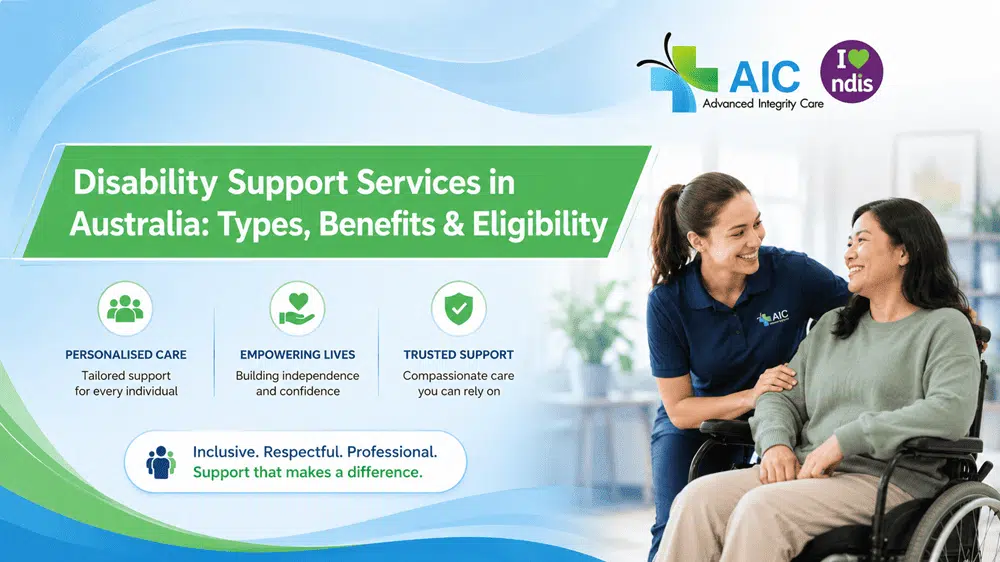
Disability Support Services in Australia: Types, Benefits & Eligibility. Living with a disability should never stop anyone from enjoying an independent, meaningful, and fulfilling life. Across Australia, a wide range of disability support services helps people build confidence, participate in their communities, and achieve personal goals. Whether someone needs daily personal care, help with transport, therapy, or assistance finding employment, the right support can make a lasting difference.
At Advanced Integrity Care – NSW, we believe every individual deserves personalised care that respects their choices, abilities, and aspirations. This guide explains the types of disability support services in Australia, their benefits, eligibility requirements, and how to access the right support for your needs.
What Are Disability Support Services?
Disability Support Services are programs and personalised supports designed to help people with permanent or significant disabilities live as independently as possible. These services focus on improving quality of life rather than simply meeting basic needs.
Support can be provided at home, in the community, at school, in the workplace, or through specialised care programs. Moreover, services are tailored to each participant's individual goals, preferences, and daily routines.
Some people require occasional assistance, while others may need ongoing support every day. Because everyone's situation is different, support plans are customised accordingly.
Why Disability Support Services Matter
The right support empowers individuals to take control of their lives. Instead of focusing on limitations, disability services encourage independence, inclusion, and personal development.
Some key advantages include:
- Greater independence in daily living
- Improved physical and emotional wellbeing
- Better social participation
- Increased confidence
- Access to education and employment opportunities
- Reduced stress for families and carers
- Enhanced community inclusion
Consequently, many Australians experience a higher quality of life through personalised disability support. Get Details About Disability Services in Chisholm.
Common Types of Disability Support Services in Australia
Australia offers various support options to suit different needs and life stages.
| Service Type | Purpose |
|---|---|
| Personal Care | Assistance with showering, dressing, grooming, and hygiene |
| Domestic Assistance | Help with cleaning, cooking, laundry, and household tasks |
| Community Participation | Support to attend social events, hobbies, and activities |
| Transport Assistance | Safe travel to appointments, work, or community programs |
| Supported Independent Living (SIL) | Daily support for people living independently or in shared homes |
| Respite Care | Temporary support that gives family carers a break |
| Allied Health Services | Occupational therapy, physiotherapy, speech therapy, and psychology |
| Employment Support | Assistance with job preparation and workplace participation |
Each service aims to improve everyday living while promoting independence and confidence.
Understanding the NDIS
The National Disability Insurance Scheme (NDIS) is Australia's primary funding program for eligible people with permanent and significant disabilities.
Rather than offering the same support to everyone, the NDIS provides funding based on individual goals and needs.
An NDIS plan may include funding for:
- Personal care
- Therapy services
- Assistive technology
- Home modifications
- Community participation
- Transport support
- Employment assistance
- Skill development
As a result, participants have greater flexibility to choose the services and providers that best suit their circumstances.
Who Is Eligible for Disability Support Services?
Eligibility depends on the type of service and available funding.
For the NDIS, applicants generally need to meet the following requirements.
| Eligibility Criteria | Requirement |
|---|---|
| Age | Under 65 years when applying |
| Residency | Australian citizen, permanent resident, or eligible visa holder |
| Disability | Permanent or significant disability |
| Functional Impact | Disability affects everyday activities |
Even if someone is not eligible for the NDIS, they may still access community-based disability services through state programs or private providers.
Therefore, it is always worth exploring every available option.
Related Post:
» NDIS Respite Care: How It Enhances Family Wellbeing
» Choosing the Right Respite Care
» The Impact of Respite Care on Long-Term Caregiving
» NDIS Nursing Services for Aged Care Patients
Personalised Support Makes a Difference
No two people experience disability in the same way.
For this reason, personalised care plans deliver better outcomes than one-size-fits-all approaches.
A tailored support plan considers:
- Individual goals
- Daily routines
- Medical requirements
- Family involvement
- Personal interests
- Cultural preferences
- Communication needs
This person-centred approach allows participants to remain in control of the support they receive.
Benefits of Professional Disability Support
Professional disability support extends far beyond physical assistance.
Improved Independence
Support workers encourage individuals to complete daily tasks independently whenever possible.
Better Social Connections
Regular community participation helps reduce isolation while building confidence and friendships.
Increased Safety
Professional carers provide safe assistance with mobility, medication reminders, and personal care.
Emotional Wellbeing
Reliable support often improves self-esteem while reducing anxiety for participants and their families.
Skill Development
Participants can develop life skills such as budgeting, cooking, shopping, and public transport use.
Overall, quality disability services promote independence rather than dependence.
Choosing the Right Disability Support Provider
Selecting a provider is an important decision.
Look for providers who offer:
- Qualified support workers
- Flexible support plans
- Clear communication
- Respect for participant choices
- Experience across different disabilities
- Positive client feedback
- Reliable scheduling
- Ongoing care reviews
Additionally, ask questions before making a decision.
The right provider should listen carefully and understand your personal goals. Get Details About Transformative Power of Disability Services care.
Daily Living Support
Many participants require assistance with everyday activities.
Daily living support may include:
- Personal hygiene
- Meal preparation
- Medication prompts
- Household cleaning
- Shopping assistance
- Mobility support
- Appointment assistance
Importantly, support workers encourage independence instead of completing every task on behalf of participants.
This balance helps individuals build confidence over time.
Community Participation
Being involved in the community plays an essential role in wellbeing.
Community participation may include:
- Sports activities
- Art classes
- Volunteering
- Social groups
- Educational programs
- Library visits
- Local events
- Outdoor recreation
Furthermore, these experiences improve confidence while creating meaningful friendships.
Assistive Technology
Modern technology helps many people live more independently.
Examples include:
| Assistive Technology | Purpose |
|---|---|
| Wheelchairs | Improved mobility |
| Communication Devices | Easier communication |
| Hearing Devices | Better hearing support |
| Mobility Aids | Safer movement |
| Smart Home Equipment | Greater independence at home |
Technology continues to improve accessibility for Australians living with disability.
Supporting Families and Carers
Disability support doesn't only benefit participants.
Families also receive valuable assistance.
Support services can:
- Reduce caregiver stress
- Improve work-life balance
- Provide respite care
- Offer professional guidance
- Improve family wellbeing
Consequently, everyone involved experiences better long-term outcomes.
Why Choose Advanced Integrity Care – NSW?
At Advanced Integrity Care – NSW, we understand that every participant has unique goals, strengths, and support needs.
Our dedicated team provides compassionate, personalised disability services focused on helping individuals live independently while remaining connected to their communities.
Our services include:
- Personal Care
- Community Participation
- Domestic Assistance
- Supported Independent Living (SIL)
- Transport Assistance
- Respite Care
- Life Skills Development
- Social Support
- Individualised Care Plans
We work closely with participants and families to deliver reliable, respectful, and person-centred care that promotes dignity, choice, and independence.
Conclusion
Accessing the right Disability Support Services in Australia can transform everyday life. Whether someone requires personal care, community participation, transport assistance, or specialised support, tailored services create opportunities for greater independence and improved wellbeing.
Choosing an experienced provider such as Advanced Integrity Care – NSW ensures participants receive compassionate support that aligns with their goals, respects their choices, and empowers them to live confidently within their communities.
Social:
https://x.com/a_i_care/status/2072209750608191870
https://www.linkedin.com/feed/update/urn:li:share:7477975913096359937/


Comments
Post a Comment